Wednesday, 3 May 2023

Where have I gone?

Have you noticed I've not been hiking much recently? Perhaps it was my absence from social media? Most likely you didn't notice at all! But I have been absent, and my last big hike was in Norway 2018.

Everything changed towards the end of 2018 when my Father was diagnosed with terminal cancer. Anybody who's been down that road knows how it completely takes over everyone involved and your life becomes one long series of appointments. Time for anything else is minimal and certainly, there was none for long self-indulging hikes. Shortly after my father's death, we were all struck by COVID-19 and travel of any type became nearly impossible. Not long later, cancer hit again and this time it would be my mother. Fortunately, that outcome was different and Mum's doing well.  In addition, during this period I moved house and Brexit caused Tramplite Gear to, effectively, cease trading. None of this was helpful to my hiking. However, the big stopper has been my own health.

Thursday, 2 September 2021

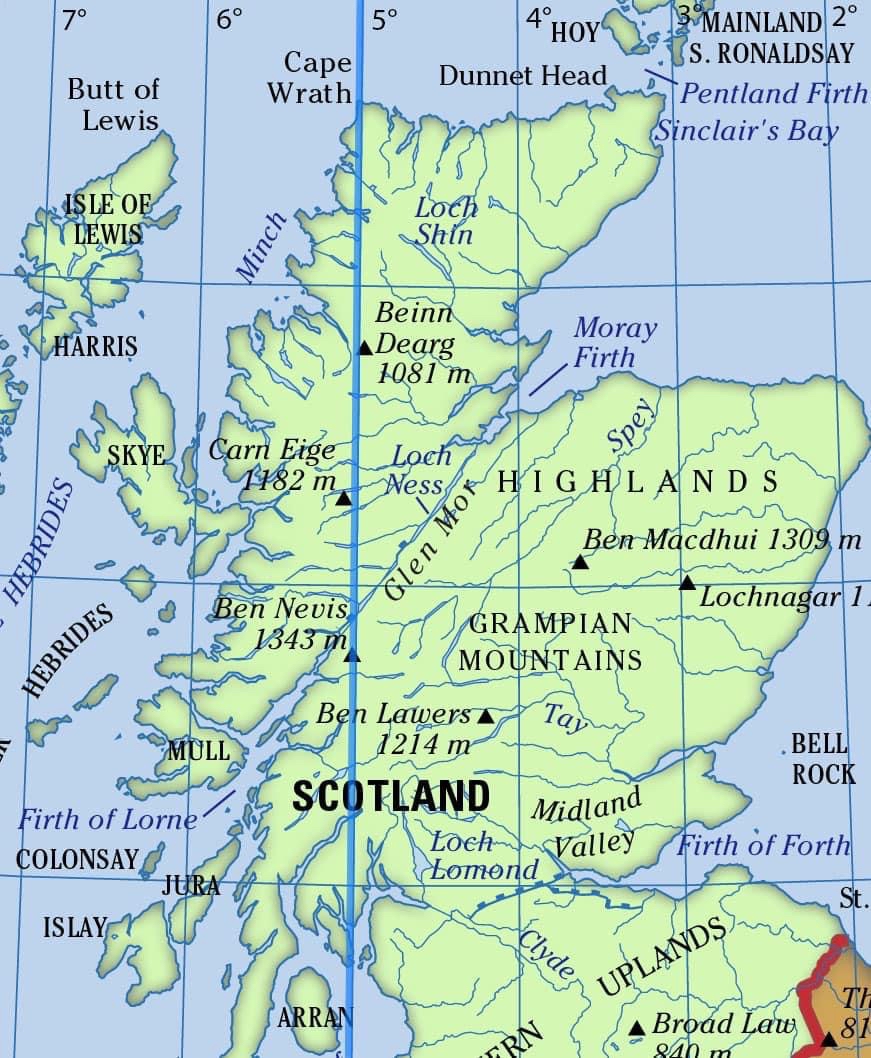
5 Degrees West

By accident, I came across a website by Bill Jack called the 5 Degree Challenge. Here a route is described following the 5 Degree West Line of Longitude from the southern tip of the Cowal Peninsula to Cape Wrath. The route promises to traverse the finest walking terrain in Scotland as well as being one of the most challenging long hikes in Britain. This all sounded fantastic and I was also pleased it was a lengthwise coast-to-coast hike across Scotland, something I’d not done before.

5 Deg west

Monday, 7 September 2020

Isle of Arran and… 2020 still sucks!

My second real hike of the year was supposed to be the big one, nothing too major but given all that’s gone on in 2020 still a good hike. I would start on the Isle Of Arran and walk the coastal path with a friend. Then, I would slowly hike north to Cape Wrath, by a little-known route. I was super excited to get started but once again 2020 had different ideas and a mixture of my father’s poor health, and an unexpected flood stopped the hike after only 4 days.

Still, those 4 days on Arran were excellent!

Arran

Saturday, 25 July 2020

The Long Wait

Normally a hike like this wouldn't make the blog, I don't blog much and I save what little I do for the longer and more “interesting” trips. However, as we all know 2020 hasn't been a normal year and this hike feels as important as any of my others, if not more.

Monday, 24 February 2020

Coast to Coast triple crown (Scotland, England, Wales) 2019

*This is one of many trips that didn't get posted when I all but abandoned this blog back in 2015. It's now 2020 and I'm adding in that missing content in a more photo-based blog post, this trip was from 2019*

Because of family health issues I wasn't able to go far or do any particularly long hikes in 2019. However, not hiking for a year wasn't going to be an option so while on The Great Outdoors Challange, a 2 week organised hike across Scotland, I came up with the idea of completing a coast to coast across all 3 mainland UK countries, or the Triple Crown for UK coast to coast hikers. Even better I could do this in 2-week chunks while still fulfilling my home commitments.

Saturday, 8 February 2020

Norway End-End 2018

*This is one of many trips that didn't get posted when I all but abandoned this blog back in 2015. It's now 2020 and I'm adding in that missing content in a more photo-based blog post, this trip was from 2018*

End to end hiking is my passion. A hike starting at one end of a country and finishing at the other feels complete, particularly so if that start and finish is bordered by sea. Actually, the sea is quite important because the feeling of physically not being able to walk further is a very satisfying way to end a hike, more so than any man-made border. Walking Norway is one of those great hikes and this one turned out to be a particularly satisfying on many levels. It also be happened to be my toughest hike to date!


Wednesday, 8 January 2020

Wainwright's and Outlying Fells

*This is one of many trips that didn't get posted when I all but abandoned this blog back in 2015. It's now 2020 and I'm adding in that missing content in a more photo-based blog post, this trip was from 2018*

I wrote a piece for TGO magazine about this hike that I recommend reading, it's available as a back issue for £4.99.

For more info on the Wainwright's then look here and for the Outlying Fells here. For more info on bagging try here.


To be honest I didn't know a lot about the Wainwright's or even the man himself. My first long-distance hike was Wainwright's Coast to Coast and that was about the level of my knowledge at that point. Of course, I was aware of the 214 Wainwright's which are extremely popular peaks to bag, but I'd never even heard of his 116 additional Outlying Fells.

Sunday, 5 January 2020

Scotland by bike and kayak 2017

*This is one of many trips that didn't get posted when I all but abandoned this blog back in 2015. It's now 2020 and I'm adding in that missing content in a more photo-based blog post, this trip was from 2017*

Back in 2015 I cycled around Scotland and Northern England but also took a packraft. While I enjoyed that trip I didn't use the packraft nearly as much as I thought I would. The reason for that, quite honestly, is that packrafts are not enjoyable, or comfortable, to paddle long distances on still-waters. On top of that, at best, you can paddle a packraft at walking pace but as soon as there's any headwind then forget it! If you're still going forward then it's a bonus in those conditions! Don't get me wrong, packrafts are fantastic in many ways and are ideal for short still-water crossings, moving rivers and rapids, hiking and so on but would I want to do a 30km Loch paddle loaded with my bike and gear? No way!


Wednesday, 1 January 2020

Norway to Scotland by foot and bike

*This is one of many trips that didn't get posted when I all but abandoned this blog back in 2015. It's now 2020 and I'm adding in that missing content in a more photo-based blog post, this trip was from 2017*

This trip didn't go well for a number of reasons and was abandoned early on. It would have been easy to just erase this memory by not blogging about it but trips don't always go to plan and it's those trips that we learn most from.

Monday, 30 December 2019

Continental Divide Trail

 *This is one of many trips that didn't get posted when I all but abandoned this blog back in 2015. It's now 2019 and I'm adding in that missing content in a more photo-based blog post, this trip was from 2016*

After last years poor showing on the Continental Divide Trail (CDT), which ended in a fractured foot, it's now time for a 2nd attempt. Like last year I would hike south which I'm convinced is the best way for any CDT hike. Why? Well, a northbound hike will likely hit heavy snowpack, leftover from winter, forcing a compromised route through some of the best hiking that the CDT has to offer in Colorado. 90% of hikers will head north and securing permits can be an issue for the busy Yellowstone and Glacier National Parks. However, for me, the main reason for my southbound hike was I didn't want to experience an overcrowded trail like I had on my previous hike across the USA, on the Pacific Crest Trail (PCT). I love hiking in the USA because of the true wilderness that we just don't have in Europe and large numbers of other hikers can spoil that for me. 

Monday, 23 December 2019

Northern England/Scotland bike & raft


*This is one of many trips that didn't get posted when I all but abandoned this blog back in 2015. It's now 2019 and I'm adding in that missing content in a more photo-based blog post, this trip was from 2015*

After the disappointment of abandoning the CDT, with a fractured foot, I was looking for a trip that could be done while the healing process continued. Hiking trips were still not possible but my doctor said I would be ok to cycle in stiff cycling shoes. Great, but I'm not sure he had a 2600km cycle tour in mind! 

Sunday, 22 December 2019

Time to bring back the blog (sort of!)

For the last few years the blog side of this site has been missing and that's purely down to my laziness! I really don't enjoy writing blog posts, they take way too much time and others do it far better! Nevertheless, I do want my trips to be recorded in some form, and I have enjoyed looking back at my previous trip reports. I often wonder why I take photos on my trips when they never get seen, I've 10’s of thousands of unedited photos sitting on hard drives! But I do enjoy taking photos and I need to find a good compromise between a conventional blog and a simple social media service like Instagram. Instagram works fine for a here-and-now kind of post but isn't much good for the longer-term. As a trial I plan to restart the blog here but make it more photo based, with minimal words, and see how that works for me. It will start where the old blog left off, in 2015, and that content will be added over the next few weeks/months. 

Tuesday, 12 March 2019

New 2019 Tramplite Shelter For Sale - SOLD

**SOLD**

This is a rare opportunity to get the latest 2019 Tramplite Backpacker shelter, with no wait! I have new, slight 2nd quality, outer complete with 1st quality inner that I'm offering at a £55 discount (10% reduction on outer). Unfortunately I had a bad day and there was a minor sewing mishap when fitting the zip leading to some additional holes in the DCF fabric, oops! This has been professionally, and permanently, repaired with an additional strip of DCF fabric, sewn and bonded, into the zip assembly during manufacture. It will not affect performance, or shelter life, and is almost invisible. This shelter is ready to go with next day delivery and all normal warranties will apply. This shelter will be offered to those on my email list first, if unsold by 18th Mar it will then be available to all.

Tramplite Backpacker Outer with Inner £745 + £10 (UK Delivery)

*With Brexit looming I’m not prepared to export this item so this is for UK delivery only.*


Backpacker 2 position door
Backpacker rear panel guys and additional mid panel pegging points
Backpacker door fully open

Sewing flaw
Repair strip

Saturday, 8 December 2018

Tramplite Gear Update Dec 18

Unfortunately gear production will be slower than normal for the foreseeable future due to family illness. Those orders already accepted, and allocated time-slots, will be honoured but might be moved around family commitments. Those still waiting on the old list, that I’ve not yet contacted, may have to wait a little longer. You have not been forgotten!

For all new gear enquiries please contact us using the forms on this site and we will add you to the Tramplite Gear Email List where future availability will be announced.

Thank you for your patience and understanding during this period. 


Colin Ibbotson

8 Dec 18

Tuesday, 6 November 2018

Tramplite Shelters


Original Tramplite Tarp (discontinued), UK Lake District

Tramplite Gear is currently closed and WILL NOT reopen until trading with the EU becomes viable again.

History

Tramplite shelters began as a MYOG (Make Your Own Gear) project in 2013 for my New Zealand Te Araroa hike because I was increasingly underwhelmed with commercial Cuben Fiber shelters (Cuben Fiber has since been renamed Dyneema Composite Fabrics or DCF). I wanted a small, light, but stormproof shelter and many failed when it came to the last point as, generally, DCF shelters are designed in the USA for use below tree-line. Unhappy with what was available I made my own. That original shelter was a huge success and that design has been further refined over 10000’s miles hiking, cycling and paddling north of the Arctic Circle in Norway/Sweden/Finland, Scotland, England and USA. Version 2 was released in late 2016 that saw further refinements to the outer and the ability for the inner and outer to be pitched as a single unit. The much-requested option of an extended, lower, front door was added and has become standard on all 2019 shelters. 2017 saw additional options of inner tent pockets, 2 styles of groundsheet protectors and an extreme weather kit. The extreme weather kit and inner pockets are now standard on all 2019 shelters.

Solo Backpacker Lite, UK Howgill Fells

2019 Tramplite Solo Shelters 

For 2019 the range has been simplified to 2 solo models, Solo Backpacker and Solo Backpacker Lite, meaning the tarp and 3/4 zipped door versions have been discontinued. Both 2019 models are the same size and shape, take the same solid inner, but are focused on different groups of hikers.


Solo Backpacker, UK Lake District

Solo Backpacker Lite

This is the original Tramplite extended zipped doored shelter, updated for 2019, and is for the ultralight hiker looking for class-leading performance at the lowest weight. The Backpacker Lite is the shelter that Tramplite has personally used on every hike since 2013. It’s been trail tested over 10000’s miles in Scotland, New Zealand and Arctic Scandinavia, among others. It’s tough, very light and resists wind well. For 2019 a new 2-way venting zip is fitted, tougher Hybrid-DCF dome and a simpler automatic zip strain relief system. 4 external guys are now standard on the Backpacker Lite and the new, exclusive to Tramplite, Backbone System (see Solo Backpacker for details) can be fitted as an optional extra if you need even better foul weather performance. The Backpacker Lite requires a minimum of 7 pegs (full pitch, including external guys, requires 10).


Solo Backpacker Lite, Northern Norway

Solo Backpacker

The Backpacker is new for 2019 and is an uprated version of the Backpacker Lite for those that need exceptional poor weather performance at the lowest possible weight. The Backpacker features 4 extra pegging points, to keep those panels really taut and reduce flapping, and all pegging points use heavier duty Hybrid-DCF fabric. The front porch has extra weather protection with a new 2 position door that can be operated, without ever leaving your sleeping bag, using a simple pulley system (a conventional and slightly lighter guy can be fitted, if preferred).  The Backpacker is supplied fitted with the new, and exclusive to Tramplite shelters, Backbone System which uses the 2nd hiking pole as a brace for the rear panel without requiring any additional hardware (pole extenders etc).  This unique system places the 2nd hiking pole handle into the outer dome, effectively creating a big hinge, and the tip end is locked in place by the external guying system. The Backbone System really stiffens up the structure and takes the performance of the Tramplite Solo Backpacker to a new level for such a light shelter. The Backpacker requires a minimum of 7 pegs (
full pitch, including external guys, requires 14).

Solo Backpacker, 1/2 opened doors, UK Howgill Fells
Solo Backpacker, fully open doors, UK Lake District
Solo Backpacker Backbone System

Solo Backpacker door pulley system


Standard Tramplite Shelter Features 

New for 2019 both shelters feature a double venting door zip which allows better condensation control when the shelter has to be zipped up in particularly foul weather. Also new is the zip strain relief system which automatically reduces the tension on the zip as you tighten the front door guy, no more messing around with buckles! Both shelters feature adjustable Line-locs, on all pegging points, that uses a unique Dyneema cord arrangement that will never slip. The front and rear guys use mini Clamceat Line-lok's with tough Dyneema cord of a thickness that reduces the likelihood of tangles.  The mini-beak gives good rain protection even with both doors open. The inner can be left attached to the outer using a system of shock cord and toggles. There are hanging points to support a bivi bag. A Cuben storage sack is included.

Solo Backpacker Lite Line-Loc Pegging Points
Solo Backpacker Automatic Zip Strain Relief System
Twin Venting Zip System

Inners 


For 2019 the inner has been redesigned to give more floor space and now includes the 2 inner accessory pockets as standard. The inner pitches tighter and with a tensioning system on each seam allows for a taut pitch even on rough surfaces, no more saggy panels! Tramplite inners feature a proper bathtub floor, with fully sealed seams, and have a ’T’ zipped door arrangement which allows better access to the inner. All inners have solid side and rear panels, to keep off drafts and condensation, while the front doors have a solid lower panel with a mesh upper for ventilation. Inners can be left permanently attached to the outer but also quickly removed when needed.

Solo Backpacker fitted with 2019 Inner

Solo Backpacker with 2019 Inner
Inner Tent Panel Tensioners


Sizing


Tramplite shelters are designed for users up to 188cm (6' 2"). Users a little taller than this will fit but with a thick sleeping mat and winter bag, your head and feet may touch the sloping inner sides. Smaller users will have masses of storage space above the head and below the feet. Tramplite shelters pitch with a single hiking pole (not supplied) that needs to extend from 120-130cm.


Materials/Construction


At Tramplite Gear we are only interested in supplying you with the finest kit. Both shelters use tough 0.74oz DCF for the outer fabric and inner base. Outer zips are water-resistant YKK No 3. The dome is lined with Hybrid-DCF fabric. The solid inner uses a very breathable, high quality, 30D yellow coloured nylon fabric and all mesh is midge-proof. Webbing and hardware fittings are the finest available.

Backpacker

Optional Groundsheet Protectors

DCF is tough but not very abrasion resistant and unless pitching on grass a groundsheet protector is recommended. We can supply simple custom-sized protectors in lightweight clear plastic or Tyvek. Tyvek has superb puncture resistance, is almost indestructible, and is recommended for areas where you will likely be camping on sharp rocks, or around spiky plants (desert campers this is for you!). Plastic is much lighter, completely waterproof, and offers good abrasion resistance, but has less puncture protection. At Tramplite Gear we’ve tried many different plastics over the years and these are the best by far. Plastic won’t last as long as Tyvek, and if punctured must be taped before it tears, but with minimal care, I normally get at least 1 long hike (5-6 months) from each protector - NOTE this is continuous use and it is likely you will get many years of more normal use. We bond all edges of our clear plastic protectors to help prevent rips and if you do puncture them they are easily patched with most tapes.

The Tramplite Way


Tramplite shelters are designed, and expertly handmade, in the UK with exposed Northern European conditions in mind, that alone makes them unique. Every shelter has been designed, tested, and built by a hiker of considerable experience who still manages to hike 4-5 months/year and the shelters you see here are identical to the shelters used, and continuously developed, on those hikes. Tramplite shelters are very light but strong, fully weatherproof (including taped seams) and remarkably stable for the weight. These shelters are premium products and no compromises are made in the selection of materials or construction methods. Most manufacturers simply stick their shelters together with double-sided tape leading to designs that are weaker, and pitch less taut, than a Tramplite shelter. Simply, if you want to resist wind effectively then you need a tough and taut shell. With a Tramplite shelter, every major seam is rolled twice, double sewn and finally over-bonded. This gives an immensely tough seam, comprising of a minimum 6 individual layers of DCF, that is immune to fabric de-lamination while allowing immense pressure to be applied to the pegging/guying points (which are directly attached to the seams). With shelters that are stuck together, you are effectively only bonding the 2 outer faces of plastic film together and any de-lamination of the DCF fabric can lead to catastrophic failures. Any shelter built this way and used on exposed sites, and in consistently high winds, is more likely to delaminate over time but even when new, and performing as designed, is still much weaker than a Tramplite and will flap easily. 

So why are most DCF shelters simply stuck together? Profit! You can build 3 of those shelters in the time it takes Tramplite Gear to lovingly craft 1. For the customer, there are no advantages other than sometimes a cheaper price.

Taped Seam Left, Tramplite Seam Right

Product Weights


All weights are approximated and can vary due to differences in fabric batches and any modifications. Weights of DCF batches vary hugely and that is completely out of our control. Specified weights include all standard supplied items and a DCF storage sack, if appropriate. Weights here are an average of every product that leaves the Tramplite workshop so are as accurate as possible. Products marked with (est) are estimated weights and that may be because that combination hasn't been supplied yet or because the product is too new to get an accurate average weight.

Outers

Tramplite Solo Backpacker Lite    395g
Backbone Upgrade for Backpacker Lite    36g
Tramplite Solo Backpacker    480g
Storage Sack    9g

Inners

Tramplite Solo Inner    345g

Groundsheet Protectors

Tramplite Solo Groundsheet protector Tyvek 160g (est)
Tramplite Solo Groundsheet protector plastic 58g

Prices/ordering


To inquire about ordering email using the forms on this site. Please note Tramplite Gear is not a full-time business and there may be some waiting. For 2019 the list system, operated since 2016, has been withdrawn because it's become increasingly difficult to manage.  If there is no immediate availability then you have the option of joining a mailing list and emailed as soon as possible, if there are others on that list then it becomes a first come first served system.

Prices are current for Oct 19 but is subject to the value of the £ when we order fabrics and actual price could be higher or lower.

Tramplite Solo Backpacker Lite Outer (each) £480
 
Backbone upgrade for above £50
Tramplite Solo Backpacker Outer (each) £560
Tramplite Solo Inner (each) £250
 
Tramplite Solo Groundsheet protector, white Tyvek £35 
Tramplite Solo Groundsheet protector, clear plastic £20

UK P&P by next day Special Delivery (fully insured) £10-15
F
or all overseas deliveries we will quote you two prices: one insured at our risk and one uninsured at your risk. 


FAQ's, warranty and returns

Cost

"Why are your DCF shelters so expensive?" is a question we are often asked. Actually, Tramplite DCF shelters are incredibly cheap given the expense of the fabrics, the quality of the product, and the experience of the team. All DCF fabric comes from a single factory in the USA and has to be imported.  By the time DCF arrives with us, it costs around £35/m. A solo Tramplite shelter uses 9m of DCF giving a total DCF fabric cost of £315. Add to that the specialist adhesives, other fabrics/webbings/fittings and you see there's not a lot left. And that's before our time is added in. Most DCF manufacturers are based in the USA and don't have to pay postage and import duties, most manufacturers sell a compromised product and stick their shelters together with double-sided tape. We don't do that at Tramplite Gear.

Lifespan

DCF shelters will normally last one long thru-hike, it's likely there will still be some life in the product but not enough to take on another long thru-hike. One long thru-hike is considered to be PCT/CDT sized (4-5000km) and around 5-6 months of continuous use. For the more normal hiker, this will be many years! You can be kind to your shelter by not leaving it pitched in sunlight more than necessary, drying it carefully after each use, and cleaning the zips regularly. 

Warranty

All Tramplite shelters are warranted for the period of 1 yr from the date the product is received. If you, the original purchaser, discover what you consider to be a manufacturing defect then you can return the shelter to Tramplite Gear for inspection, and we will, at our discretion, either repair, replace, or return the item. 

This warranty does not cover accidental damage, misuse, wear and tear or material degradation from extended use.

Contact Tramplite Gear before sending in any items as we may be away hiking!

Returns

If you are not happy with your purchase then you may return the unused items within 14 days for a full refund*. Any items that have been used cannot be returned. Returns are also not normally accepted for custom items.

* excludes overseas P&P and any refund of import duties

Wednesday, 18 April 2018

Lake District Wainwrights and Outlying Fells

The Lake District is a National Park and UNESCO World Heritage Site in Northern England. Famous for its outstanding beauty, Lakes, Fells (mountains) and the writings of William Wordsworth, Beatrix Potter and John Ruskin among others.

In 1952 Alfred Wainwright began a 13 year project producing the famous “Pictorial Guides to the Lakeland Fells”. In this seven volume series he identified 214 Fells which have become known as the Wainwrights. Many walkers like to climb all these Fells, called bagging, and that normally takes many years. A few hikers have been known to tackle all 214 Fells in one trip and a couple of Fell runners have done the same, only quicker. Lesser know is Alfred’s 8th book called the “Outlying Fells of Lakeland” which was written some 8 years later. These 116 additional Fells often aren’t as grand as the Wainwrights and are sometimes in the furthest corners of the park, and occasionally even outside the park. Being much less famous, and often miles away from anywhere, they aren’t bagged as often. Surprisingly, as far as I can tell, nobody has ever done a continuous hike of the Outlying Fells.

Wainwrights 8 books of the Lakeland Fells
The seed for me hiking the Wainwrights had been sewn many years ago when a friend of mine attempted them but unfortunately was unsuccessful. A few years later another friend watered that seed when they expressed their wish to hike them but for a number of reasons that hasn’t happened yet. While I don’t consider myself a bagger, though some would say I bag trails rather than mountains, something about the Wainwrights appealed and I’ve known for a while now it was only a matter of time before I’d give it a go. However, when I began planning it became apparent that this could be a far greater hike if you combined all the Wainwrights, and the Outlying Fells, into one super hike covering 330 Lakeland Fells. 

The Lake District covers 2362 square kilometres and with those 330 Fells crammed into such a small area planning is the key to a successful hike. It took many weeks of winter evenings studying maps and aerial photography to come up with a practical, and efficient, route linking all the Fells together that allowed reasonably easy resupply. I started with record breaker Steve Birkinshaw Fell running route, which he has very kindly posted online as a gpx file, and modified that. His route is very roughly planed and as a runner he seemed mainly interested in speed between peaks so this route wasn’t always the best for a backpacker. What his route did give me was a great starting point for efficiently linking the 214 Wainwrights that just needed some refining. To that basic route I then added spurs for the additional 116 Outlying Fells and resupply options.  

My route will also be available as a gpx file after the hike.

Planned Route
I plan to start hiking the route on the 23rd April covering 1061km (659mi) and will climb 330 Lakeland Fells with 56225m (184465ft) of elevation gain. I’m not sure how long this will take but I’ve estimated about 6 weeks, time however isn’t an issue.

I’ve put together a set of personal rules for this hike :

The hike must be continuous, and always on foot, with the exception of resupply when I may take a bus or train into town. Then, I will always return to the exact same spot and continue, on foot, to maintain the continuity of the hike.

I must visit the summit of all 330 Fells, where possible. Most Fells are on public, or access land, and there should be no issues  bagging those. Some are on private land which I have no legal right to access, however it appears most landowners tolerate walkers bagging those Fells. The exception to that is Williamson Monument where the landowner strictly refuses all public access. It’s also possible I may be refused access to other private Fells for a number of reasons (perhaps farming work).

With this in mind I will bag all Fells on public and access land and where possible bag those on private land. If access to private land is refused then I will get as near as I can legally to that Fell. I’m hopeful there will only be access issues with the one Fell already mentioned and I will decide what to do about that when the time arrives.

Monday, 16 January 2017

Tramplite Custom Made Packs

2017 50L grey pack
Tramplite Gear is currently closed and WILL NOT reopen until trading with the EU becomes viable again.

My first major Make Your Own Gear (MYOG) item was a pack and I've never used a commercial one since. Tramplite packs have evolved beyond recognition since that early example but the core principle of being as light as possible, while still comfort, remains. My 2017 packs have had a major update with a new frame design, increased ventilation and some additional new features.

Torso Measuring Guide

Rucksack sizing 

Measuring your torso length correctly is critical so I can build you a properly fitting backpack. You will need a helper to do this accurately and get them to repeat the measurement at least 3 times to be sure. Get this wrong and your pack will not fit correctly!

Wednesday, 19 August 2015

Fixie Foot Tour

After getting the all-clear last week to do anything other than running, or heavy hiking, I’ve decided to go away on the bike for a while and ease the foot back into outdoor action. Hiking isn't a realistic option just yet (foot needs another 4 weeks) so I’ve decided to cycle/packraft instead. Part 1 of my tour is 330km of off-road biking along the Pennine Bridleway, before returning home, to fit more road friendly tires and the packraft and cycle north. I don’t have much of a plan at this stage, and I have no idea know how long I will go for, but it’s just nice to be getting out there again.

Pennine Bridleway